Lazarus Tilleny was one of St. Louis Park’s earliest residents – and characters. This account of his life comes from research on Ancestry.com, newspapers.com, research by SLP Historical Society Trustee and Re-Echo Editor William Beyer, and a profile on Lazarus Tilleny in Compendium – History and Biography, Minneapolis and Hennepin County, Minnesota, published by Holcombe and Bingham in 1914.
Tilleny was born on January 30, 1831, in England. As an infant his family moved to Canada, but his father died when he was three. His mother walked the 140 miles into Vermont with her five children in 1835 or 1848, where “Laz” may have been boarded as a child with a Stanton family.
In 1851 he caught the gold bug and went prospecting in the late California Gold Rush, crossing the Isthmus of Panama on foot, and amassing $30,000, which is about a million dollars in 2025 dollars.
He returned to San Francisco after a short trip home and farmed for a few years, returning home again to marry his childhood playmate, Lydia Ann Stanton, on February 14, 1859, in her home town of Essex, Vermont. Lydia was born on August 20, 1826 (five years his elder). Laz and Lydia first landed in Star Prairie, Wisconsin (about ten miles east of Marine on St. Croix), in 1860 to purchase a 200-acre farm.
In 1861 they moved across the river into Minnesota and bought a farm of 120 acres in what was not yet St. Louis Park, accessible from Minneapolis along Territorial Road No. 3, now known as Excelsior Blvd. He purchased his land from one or more members of the Pratt family, who purchased their property directly from the Federal Government when it first became available in 1854 – 1855.
At that time he owned 113 acres; 75 of which were improved and 38 unimproved. His occupation was always listed as a farmer.
On July 1, 1863, Laz registered for the Civil War. In a time when Southerners were generally Democrats and Northerners Republicans, one family history describes him as a Universalist and a Democrat.
Laz and Lydia built a fine new home on the remaining 10 acres of their land in 1887, the year after St. Louis Park came into existence as a Village, which suggests that they lived in more modest accommodations until then, despite their apparent wealth. Oddly, Laz was not among the 31 landowners listed as founders of the Village in 1886.
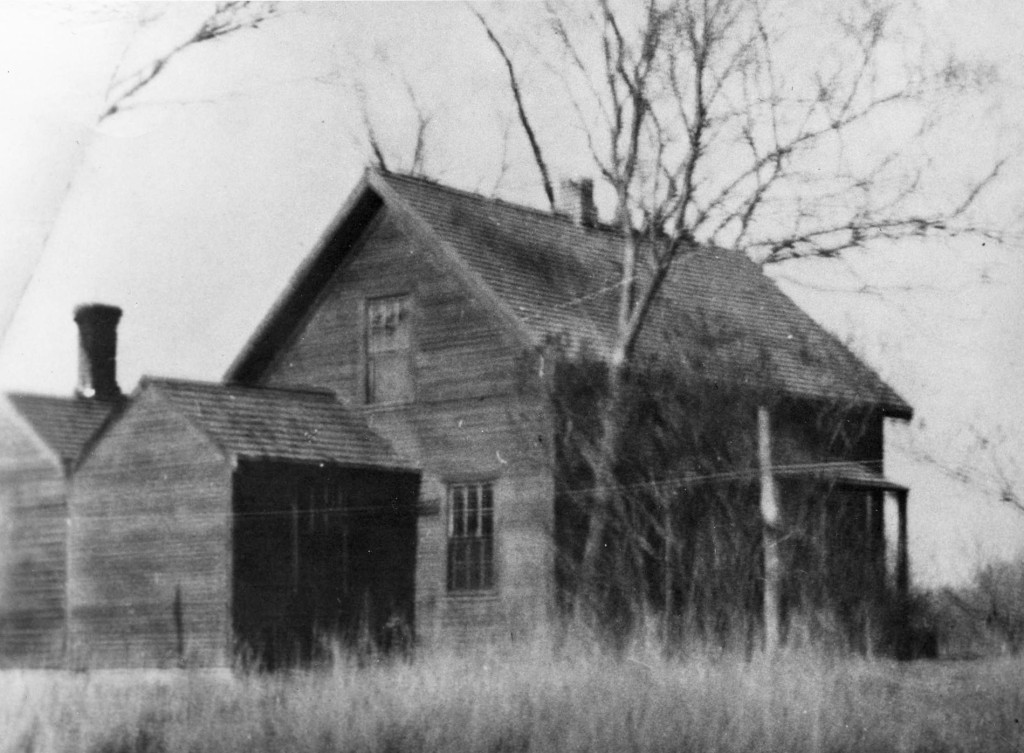
In 1891 T.B. Walker’s Syndicate was planning to build a streetcar from St. Louis Park to Minneapolis. the original plan was to run it along 36th Street, but Lazarus’s property was in the way and he wouldn’t sell. In fact, newspaper reports say that he chased surveyors off with a shotgun!
In 1900 the Tillenys had a servant named Phoebe Townsend. Phoebe had married a man from Africa in 1870 and had a son Clement, who was born in 1881 in Africa.
Lydia died on July 11, 1904, in Minneapolis. For some reason she had property in Oakland, California, worth $7,000. Her will indicates that she had something like $20,000. She left it all to Lazarus. She was buried in Vermont.
In 1910 Lazarus (age 78) and Phoebe Townsend were the only residents at his St. Louis Park home.
Lazarus took out a marriage license to marry Mary E. Camp (1874 – 1932) on July 1, 1910. He was 65 and she was 35.
Two years later they were in the news when Mary asked Laz for a divorce and Laz refused to give it to her. It turned out that Mary was the daughter of Harriet E. Camp, one of the earliest settlers of Minneapolis, and four years younger than Laz! What Laz took exception to was that Mary would rather go riding in automobiles with her young friends than spend time with her octogenarian husband. Mary claimed that after she returned from such a ride she found him lying down on the front porch with a horse blanket under his head, and that he had cursed her. At that point she had gone home to mother. Each accused the other of desertion. In November 1912, the judge refused to grant a divorce, saying “There was never any love in this marriage. If the parties can agree upon a reasonable amount for separate maintenance I will make an order.” (Minneapolis Journal, November 7, 1912)
The judge also told Mary that she had no reason to expect anything but trouble when she married a man so much older than herself. Mary charged cruel and inhuman treatment in her divorce petition, but the judge said the charge was not proved. She also said that Laz deserted her six months after the marriage. The point was made that Laz owned property of considerable value. (Minneapolis Tribune, November 8, 1912)
On December 10, 1912, it was reported that Mary got her divorce, with alimony of $40/month. It was also noted that Laz was worth over $100,000, and formerly lived in St. Louis Park. Curiously, the article said that the couple was married in June 1908, although the marriage license was taken out in July 1910. (Minneapolis Tribune)
When Laz was 85, several things were happening. First, he had sold his land, making him even richer. Mind, he never had any children – where did that money go when he died? Second, he was living on “12 acres of land, this side of Hopkins.” Does that mean St. Louis Park? It must, because the article goes on to say that his property adjoins that of Henry Hanke, County Treasurer. Thirdly, Ol’ Laz was losing it – the article was about how he was riding his horse and buggy at such a mighty clip all night that the poor horse finally dropped dead. (Minneapolis Tribune, June 23, 1914)
Lazarus apparently died before 1920. He was also buried in Vermont.
In 1920, Mary was living in Minneapolis with her sister Bertha. Mary died on January 9, 1932, in Los Angeles.
HOLCOMBE AND BINGHAM
A direct quote from the Holcombe and Bingham biography contains what Bill Beyer calls “praise and adulation written in prose so purple as to make a Vikings fan blush, including this choice tidbit:”
Few men are more widely known in Hennepin County than Lazarus Tilleny. For one thing, he is a famous trout fisherman. For another, he is a great hunter. And for still another, he has the oddly unconscious habit of the use of swear words . . . but those old friends who know him best say his picturesque stores of early life in Vermont; of gold mining in the days of Bret Harte in California; . . . would not see half so spicy did not the rugged old man interject into his penetrating commentaries . . . the emphasis carried in an expert’s use of words which would be profane used by a less skilful and intelligent raconteur.